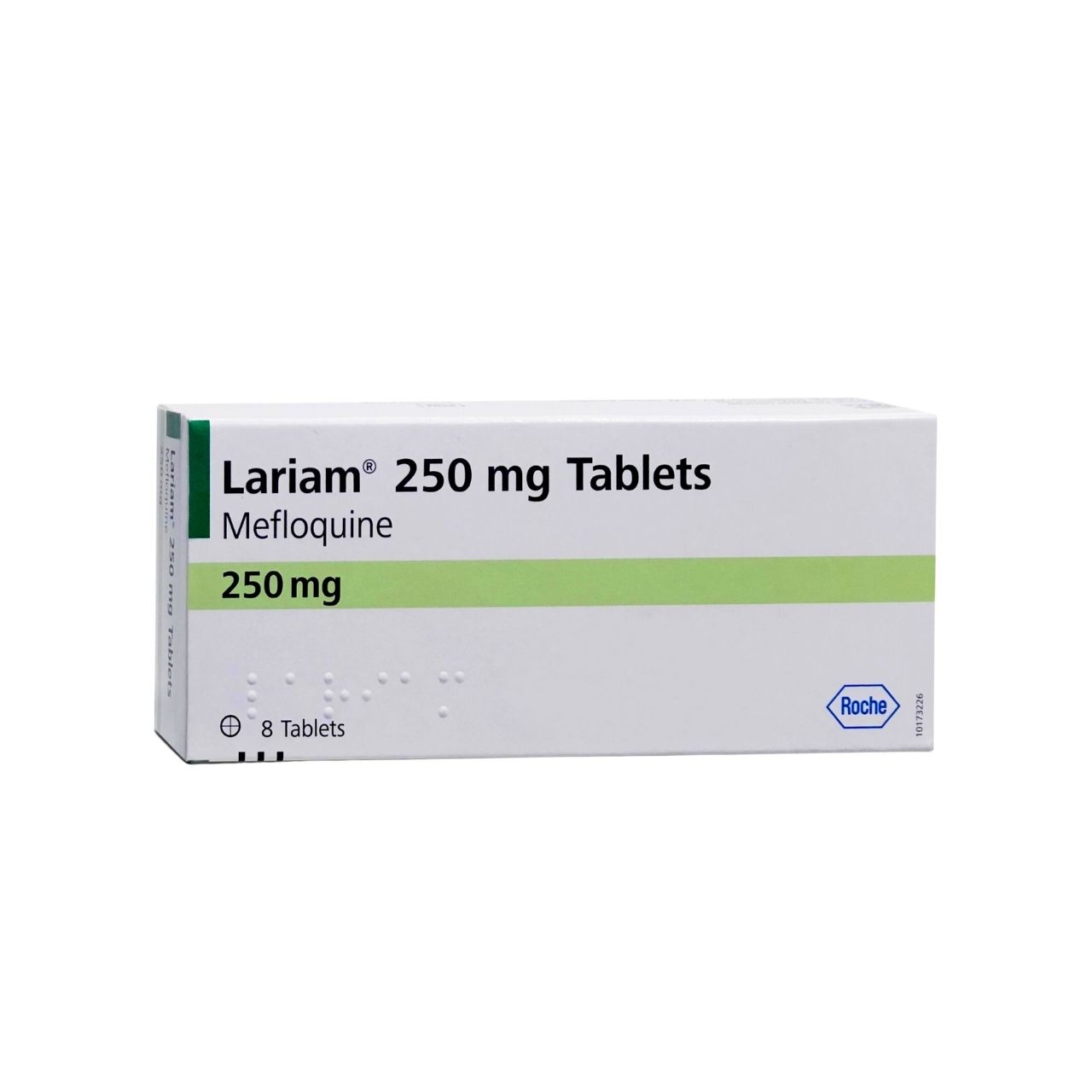
Lariam 250mg Tablets

£34.99

Lariam is a prescription-only antimalarial used to prevent Plasmodium falciparum infection.
Contains mefloquine – convenient once-weekly malaria prevention for long-term travel.
Packaging and branding may differ from image shown.

Start Assessment

Description

Lariam (mefloquine hydrochloride) is a prescription-only antimalarial medicine used to prevent infection by Plasmodium falciparum, the most dangerous malaria parasite. It is effective in many regions where other medications may fail due to drug resistance.

Lariam is taken once weekly, making it a convenient option for travellers heading to high-risk areas for extended periods. However, it is essential to evaluate suitability, as Lariam can cause neuropsychiatric side effects in sensitive individuals.

How It Works

Mefloquine, the active ingredient in Lariam, works by disrupting the parasite’s ability to break down and utilise haemoglobin, which is toxic to the malaria parasite. This action kills the parasite before it can multiply and cause illness.

It offers long-acting protection due to its extended half-life, which allows once-weekly dosing.

Why Choose Lariam Tablets

Lariam may be recommended in specific travel scenarios where other malaria treatments are not suitable or available. Its main advantages are:

Once-weekly dosing – ideal for longer trips

Effective in chloroquine-resistant regions

High tissue penetration offering strong prophylaxis

Proven use in military and humanitarian deployments

It is a cost-effective choice but should only be used after a thorough medical history assessment.

Important Note

Start this medication 10 days to 2 weeks before travel to monitor for side effects. Continue weekly during your stay and for 4 weeks after returning. If side effects occur, stop treatment and seek medical advice. Do not use Lariam again in future if adverse effects were experienced previously.
Directions

Please refer to the medication’s patient information leaflet before starting any new medication.

  • Take one tablet once a week, on the same day each week

  • Begin 1–2 weeks before entering a malaria-risk area

  • Continue weekly while abroad and for 4 weeks after return

  • Swallow whole with food and water

  • Do not exceed the prescribed dose

  • Store below 25°C

  • Keep in original packaging

  • Keep out of reach of children

Ingredients

  • Active Ingredient:

    • Mefloquine hydrochloride 250 mg (equivalent to 228 mg mefloquine base)

    Other Ingredients:

    • Microcrystalline cellulose

    • Lactose monohydrate

    • Maize starch

    • Povidone

    • Talc

    • Magnesium stearate

Side Effects

  • Common side effects may include:

    • Nausea

    • Dizziness

    • Vivid dreams

    • Sleep disturbances

    • Headache

    Serious (rare) side effects:

    • Anxiety or depression

    • Hallucinations or paranoia

    • Seizures

    • Irregular heartbeat

    • Severe allergic reactions

    Stop the medicine and seek medical attention if serious side effects occur.

Warnings

Do not take Lariam if allergic to mefloquine or related compounds. It is contraindicated in individuals with a history of depression, anxiety, schizophrenia, epilepsy, or heart rhythm disorders. Use with caution if taking other medications that affect mental health or cardiac rhythm. It should not be used during pregnancy unless clearly necessary and is not recommended during breastfeeding. A full medical review is essential prior to prescribing Lariam.

  • Lariam may be used in pregnancy if the benefits outweigh the risks. It is not generally recommended during breastfeeding. Always consult your GP.
  • Yes, Lariam should be taken with food and a full glass of water to help reduce gastrointestinal side effects.
  • Lariam is effective against malaria when started at least 10 days before travel, allowing time to assess tolerance and prevent side effects during the trip.
  • Lariam is not suitable for individuals with a history of depression, anxiety, or psychiatric illness. A full medical assessment is required before prescribing.
  • Lariam is used to prevent malaria, particularly in areas where Plasmodium falciparum is prevalent and resistant to chloroquine.