Description
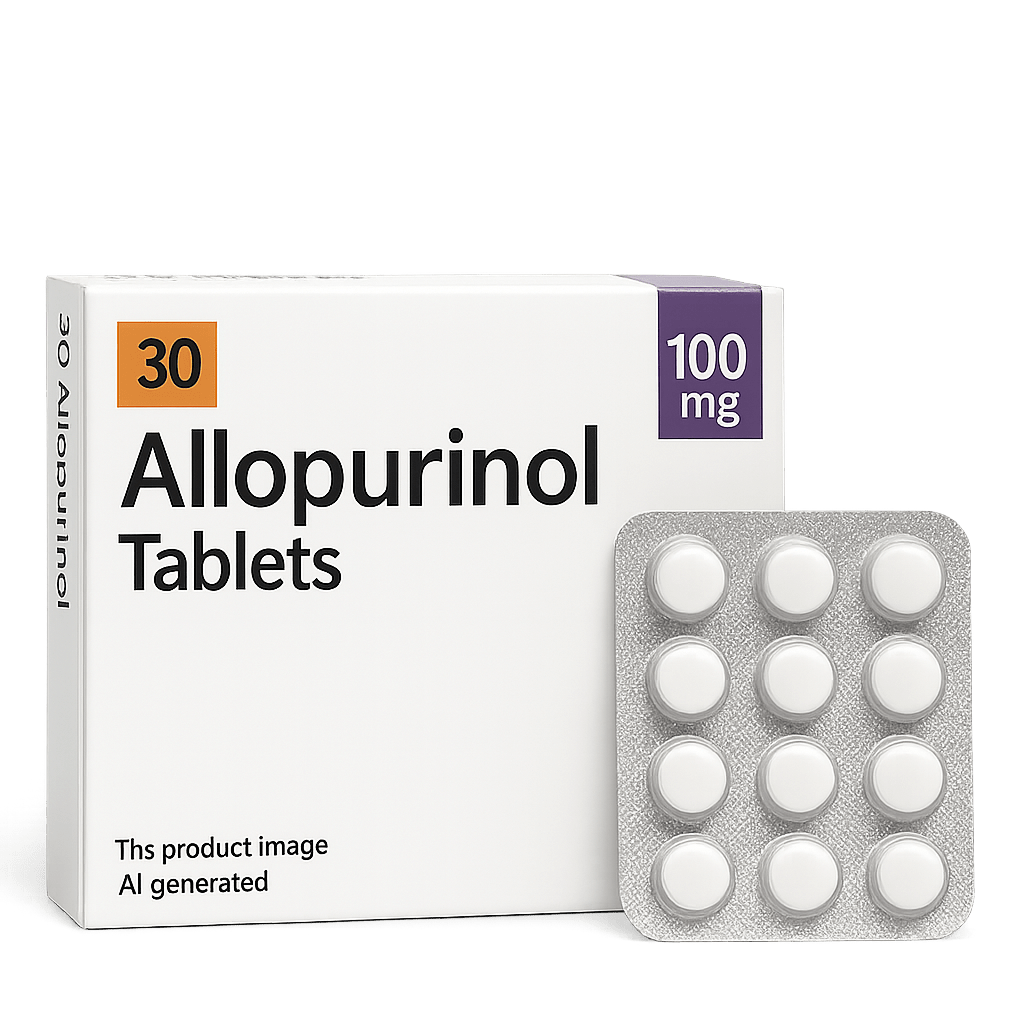
Allopurinol is a well-established medication used to manage conditions caused by high uric acid levels, such as gout and uric acid kidney stones. It is also used to control uric acid spikes during cancer treatments involving chemotherapy.
This prescription-only tablet works by reducing the production of uric acid in the body. Uric acid forms when purines (found in many foods and drinks) are broken down. Excess uric acid in the bloodstream can crystallise in joints or kidneys, causing painful inflammation or stone formation.
Allopurinol is taken daily and is most commonly available in 100mg or 300mg strengths, adjusted according to your blood uric acid levels and kidney function. It helps to prevent gout attacks, not treat them during flare-ups. As a result, it is often paired with anti-inflammatories like colchicine or NSAIDs during the first few months of therapy to reduce the risk of flare-ups triggered by uric acid shifts.
Regular blood tests are needed to monitor your kidney function and uric acid levels. Most patients will notice a reduction in flare-ups within 2–3 months of starting treatment. It is critical to continue taking Allopurinol as prescribed even if symptoms improve or disappear.
How It Works
Allopurinol inhibits an enzyme called xanthine oxidase, which is responsible for converting purines into uric acid. By reducing uric acid production at its source, the medication helps prevent crystal build-up in the joints and urinary tract.
Why Choose Allopurinol
Proven and long-term treatment for gout and hyperuricaemia
Reduces risk of gout flares and kidney stone formation
Often part of a preventive management plan after repeated flares
Can be used with other medications to enhance symptom control
Low cost, high efficacy for chronic uric acid conditions
Important Note
Do not stop treatment abruptly without speaking to your doctor. Stay hydrated to reduce the risk of kidney stones. Avoid high-purine foods and alcohol during treatment.
Dosage may need adjustment in patients with kidney or liver impairment. Inform your GP if you experience rashes or unusual symptoms, as rare hypersensitivity reactions may occur.