

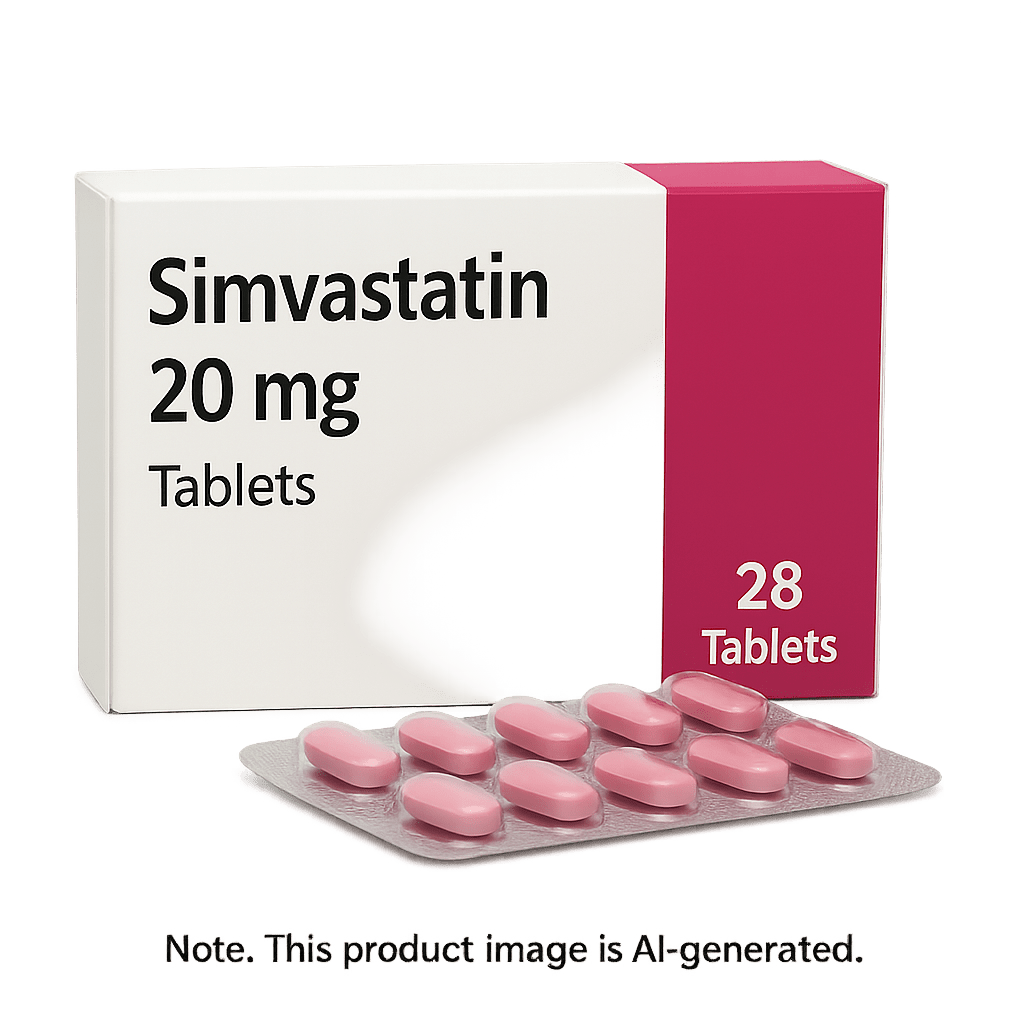
Simvastatin Tablets

Price range: £8.99 through £10.49

Simvastatin Tablets are POM statins used to lower cholesterol and reduce cardiovascular risk.
Effective for long-term prevention of heart attacks and strokes.
Packaging and branding may differ from image shown.

Start Assessment

Description

Simvastatin Tablets are widely prescribed for the treatment of high cholesterol and prevention of cardiovascular disease. They belong to the statin class of drugs, which help reduce the risk of heart attacks, strokes, and other complications caused by atherosclerosis (clogged arteries).

Simvastatin is most effective when combined with a low-fat diet, regular exercise, and healthy lifestyle habits. It is commonly prescribed to adults with high cholesterol levels, particularly those with additional risk factors such as diabetes, high blood pressure, or a family history of heart disease.

How It Works

Simvastatin works by blocking an enzyme in the liver (HMG-CoA reductase) involved in cholesterol production. This reduces the amount of LDL (bad) cholesterol and triglycerides in the blood, while modestly increasing HDL (good) cholesterol levels.

By lowering cholesterol, Simvastatin helps slow or prevent the build-up of fatty deposits in arteries, improving blood flow and reducing the risk of cardiovascular events.

Why Choose Simvastatin Tablets

Simvastatin is a well-established treatment, used in millions of patients globally. Benefits include:

Proven to reduce heart attack and stroke risk

Suitable for daily maintenance therapy

Usually well tolerated

Works synergistically with diet and exercise

Available in multiple strengths for flexible dosing

It is typically taken in the evening when the liver produces the most cholesterol, improving its effectiveness.

Important Note

Simvastatin should be taken exactly as prescribed. Blood tests may be needed to monitor liver function and cholesterol levels. Avoid alcohol misuse and do not consume grapefruit or grapefruit juice during treatment. If you experience unexplained muscle pain or weakness, consult your GP immediately.
Directions

Note: Always follow your doctor’s instructions and the patient leaflet.

  • Dosage and Frequency:

    • Typical dose: 10–40mg once daily in the evening

    • Maximum dose: 80mg only under specialist supervision

  • Administration:

    • Swallow whole with water

    • Can be taken with or without food

    • Take in the evening for best effect

Storage:

  • Store at room temperature

  • Protect from moisture and light

  • Keep out of reach of children

Ingredients

  • Active Ingredient:

    • Simvastatin (strength varies: 10mg, 20mg, 40mg, 80mg)

  • Key Excipients:

    • Lactose monohydrate

    • Butylated hydroxyanisole (E320)

    • Microcrystalline cellulose

Side Effects

Common side effects:

  • Headache

  • Nausea

  • Muscle aches

  • Constipation

Serious side effects (rare):

  • Muscle pain or weakness (rhabdomyolysis)

  • Liver dysfunction

  • Allergic reactions

Seek medical help if you experience yellowing of the skin, dark urine, or severe fatigue.

Warnings

  • Contraindications:

    • Active liver disease

    • Pregnancy or breastfeeding

    • Allergy to any statins

  • Drug Interactions:

    • Avoid grapefruit

    • Inform your GP if taking antifungals, macrolide antibiotics, fibrates, or HIV medications

  • Age Restrictions:

    • Not usually used in children under 10

  • Yes, Simvastatin should be taken in the evening with or without food. Avoid grapefruit juice, which can interfere with the medication.
  • No, they are not suitable for people with liver disease, certain muscle disorders, or during pregnancy. Always consult your GP before starting.
  • Yes, Simvastatin Tablets are often taken daily over the long term to manage cholesterol. They are safe for ongoing use under medical supervision.
  • Simvastatin Tablets begin lowering cholesterol within 1 to 2 weeks, but full effects may take up to 4 weeks of consistent use.
  • Simvastatin Tablets are used to lower LDL (bad) cholesterol and triglycerides, while increasing HDL (good) cholesterol, reducing the risk of heart attacks and strokes.